Duration
Traditional sessions often target thirty to sixty minutes. Micro-workouts intentionally stay short so scheduling friction stays low. You trade single-session volume for frequency across the day.

A clear definition, the science behind short sessions, and how they fit modern American schedules.
A micro-workout is a deliberately short bout of physical activity—usually between two and ten minutes—performed with focused intent rather than casual fidgeting. It includes a brief warm-up element, specific exercises or movement patterns, and often a cool-down breath sequence. The session has a start and end, which distinguishes it from generally “being active” during the day.
The concept grew from occupational health research on breaking up prolonged sitting. Public health guidelines increasingly emphasize total daily movement, not only structured exercise blocks. Micro-workouts operationalize that guidance for people who cannot commit to forty-five-minute gym visits but can manage five minutes after each meeting.
Personalization is central: your plan might emphasize hip mobility if you drive two hours daily, or wrist and neck work if you type continuously. Generic one-size programs often fail; micro-workouts succeed when mapped to your actual environment and constraints.
Traditional sessions often target thirty to sixty minutes. Micro-workouts intentionally stay short so scheduling friction stays low. You trade single-session volume for frequency across the day.
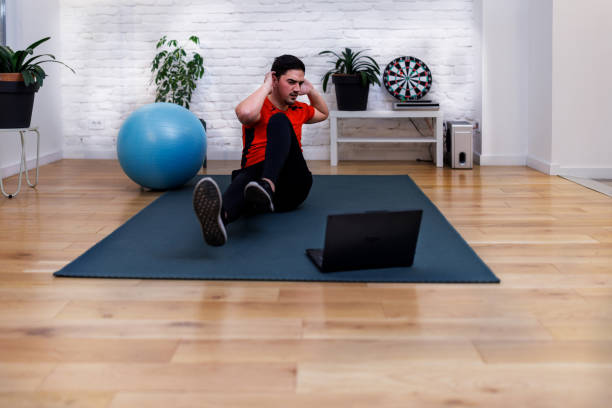
Gym-based training assumes equipment and travel time. Micro-workouts use whatever space you already occupy—office, bedroom, garage—reducing the “getting ready to exercise” overhead.
Many micro-sessions stay at moderate intensity to avoid sweat and recovery demands that interrupt work. Harder intervals appear in plans but are spaced and optional.
Think of micro-workouts as deposits in a movement bank. One deposit seems small; dozens across a month change your baseline activity profile measurably.
While individual studies vary, several themes recur in exercise science literature relevant to micro-workouts. Breaking up sedentary time with light activity may support metabolic markers compared to uninterrupted sitting. Brief vigorous intervals—even as short as twenty seconds repeated a few times—have been explored for cardiovascular adaptations in time-efficient protocols.
Cognitive performance research often shows acute improvements in alertness following short walks or calisthenics. That does not mean micro-workouts replace comprehensive fitness development, but they address a specific gap: the large population that currently moves very little and needs an on-ramp.
We cite general research trends on this site for educational purposes. Your response to any protocol depends on sleep, nutrition, stress, and individual physiology—factors no website can assess remotely.
| Date | Event | Format |
|---|---|---|
| June 14, 2026 | Intro to Micro-Workouts — definitions & demos | Online · 12:00 PM ET |
| July 8, 2026 | Science of Short Movement — discussion group | Atlanta, GA |
| August 3, 2026 | Build Your First Week Plan | Online · 6:30 PM ET |
Stretching can be part of a micro-workout, but many sessions include strength or cardio elements. A complete micro-workout often blends mobility, resistance, and elevation of heart rate rather than static stretching alone.
People with sedentary jobs, caregivers with fragmented schedules, and anyone restarting movement after a long break often find micro-workouts approachable. Active athletes may use them as maintenance between heavier training days.